Skip to content



Because we live in an increasingly digital age, cybersecurity has become an unquestionable priority for companies of all sizes and sectors. As technology advances, so do the threats that aim to exploit vulnerabilities in systems and networks. Therefore, it's necessary to keep pace.
In this context, penetration testing emerges as a vital tool for evaluating the resilience of IT infrastructures, allowing organizations to identify and correct security flaws before they are exploited by malicious actors.
In 2016, the Pentagon launched the " Hack the Pentagon " program, which invited outsiders to test the defenses of its systems. The result? The approximately 1,400 hackers who joined the project found more than 100 security threats that even the United States Department of Defense was unaware of.
Do you think your company is protected from attacks? Think again .
Throughout this pillar page, we will delve into the world of penetration testing to uncover how these simulated attacks can be beneficial in protecting data and systems.
Get ready to discover how it can be a crucial tool in identifying vulnerabilities, analyzing security posture, and building a truly resilient IT infrastructure.
What is a penetration test?
Often also known as pentesting (from the English Penetration Testing ), penetration testing is a security methodology in which specialized professionals conduct simulated attacks on systems to identify vulnerabilities.
The essence of this procedure is to act like a real hacker , with the goal of discovering vulnerabilities before they are exploited maliciously.
Below are some of the main objectives of a penetration test:
- Identify vulnerabilities in systems and networks;
- To verify the effectiveness of existing security measures;
- Assess the potential impact of cyberattacks;
- Suggest improvements based on collected evidence.
Information security specialists use a variety of tools and techniques to simulate attacks on various IT components, such as web applications, network infrastructures, and operating systems.
Thus, these simulations can be conducted from within the organization (internal testing) or externally, mimicking attacks originating from outside the corporate environment (external testing).
During a penetration test, the analyst may attempt to exploit various classes of vulnerabilities , whether configurational, software , or hardware , seeking to identify weaknesses that could be used to gain unauthorized access or cause damage to the system.
In this way, the test results often provide valuable information for IT and security teams, who can then prioritize efforts in correcting the vulnerabilities discovered, thereby strengthening the company's security profile.
How important is penetration testing for businesses?
Penetration testing is a critical methodology for ensuring a company's security, as it simulates cyberattacks with the goal of identifying and correcting vulnerabilities.
Thus, it is through this that companies can detect security flaws, both known and unknown, before real attackers exploit them . Later, after discovering these flaws, companies have the opportunity to develop an action plan to strengthen their defenses, improving the security of their digital assets.
Furthermore, preserving brand reputation is one of the main benefits of penetration testing. Security incidents can cause significant damage to a company's credibility with customers and the market. Therefore, by adopting this powerful tool, the brand demonstrates a commitment to protecting customer data and privacy.
For companies that want to maintain a robust position against digital threats, conducting regular penetration tests is a key . They not only ensure the integrity of systems but also promote a proactive stance in the face of constantly changing cyber threat landscapes.
What is the difference between a penetration test and a bug bounty ?
Today, it's common for questions to arise about the difference between penetration testing and bug bounty programs. Both are based on a similar premise – but they differ in important aspects. Let's take a look:
Penetration tests are planned where experts conduct simulations of controlled attacks on a system to identify vulnerabilities. This type of test is performed by experts known as hackers , who are hired by the company and follow a defined scope.
On the other hand, a bug bounty is a program offered by many companies and organizations where individuals can receive rewards for identifying and reporting security flaws. This is what happened in the US with the "Hack The Pentagon," as mentioned earlier.
They encourage hackers and security researchers to legally explore and report vulnerabilities. Thus, this model encourages a wide range of professionals to contribute to the improvement of cybersecurity.
The main difference between the two lies in their format and approach . Penetration tests are generally governed by confidentiality agreements and executed in a restricted testing environment. Bug bounty open the doors for the global security community to collaborate at any time, making vulnerability detection a more continuous process.
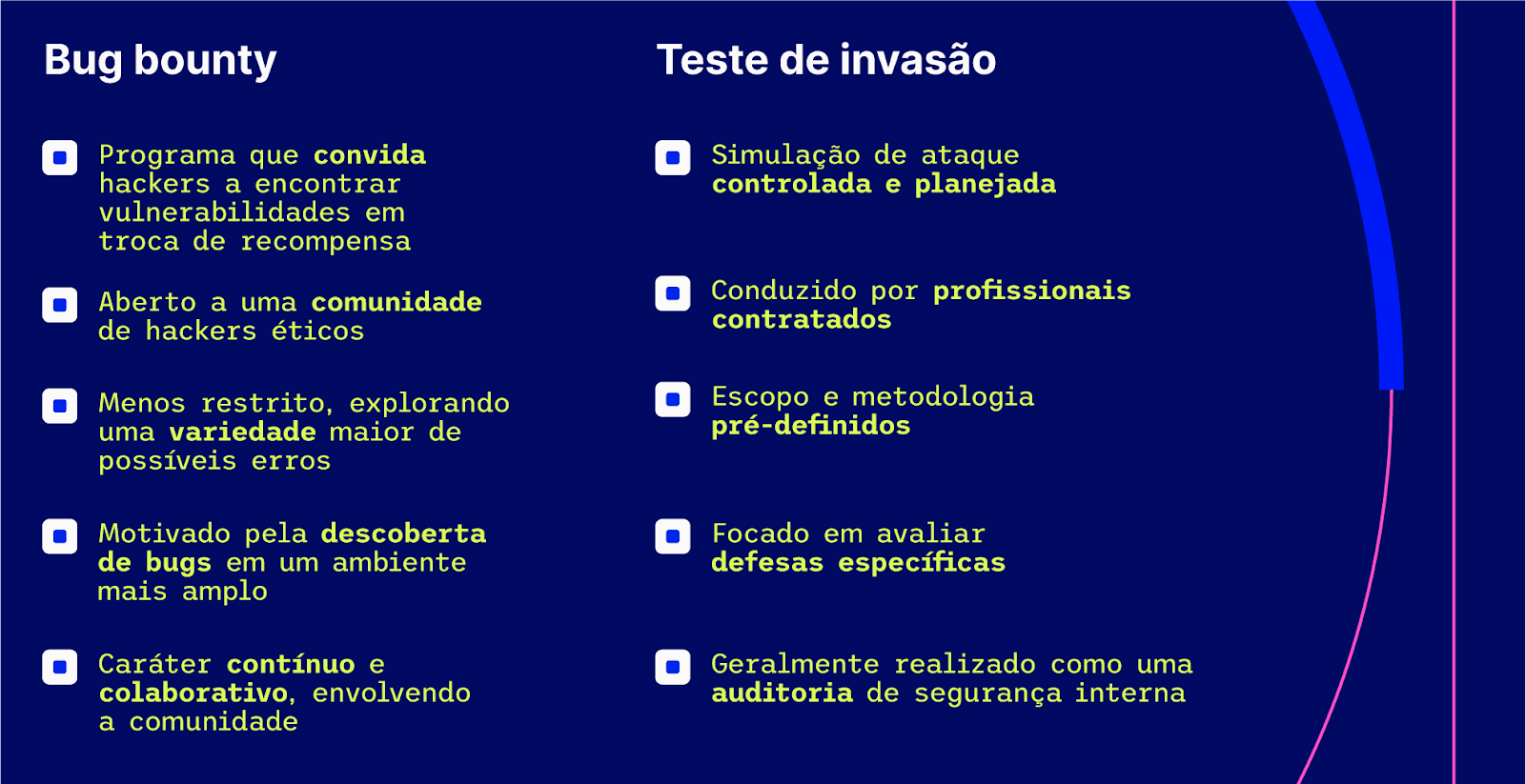
Because penetration testing is conducted by internal or contracted experts, it provides a more targeted environment simulating real attacks . This allows for a deeper and more structured analysis of cyber defenses, identifying not only known vulnerabilities but also those that may escape traditional detection.
What are the main types of penetration testing?
As we have seen, penetration testing is essential for identifying vulnerabilities in information systems. Therefore, there are different approaches depending on the scope and objectives of the test.
Each type offers a different perspective on security and they can be combined for a more comprehensive security analysis. Check it out:
Black box
black box testing , the attacker has no prior information about the target system. This approach simulates an external attack by an attacker without internal knowledge, focusing on finding exploitable vulnerabilities without any prior knowledge of the infrastructure.
White box
In contrast to black box white box testing the tester to access the source code and all relevant system information . This meticulous approach enables a deeper analysis of potential security flaws based on a detailed understanding of the system's logic and structure.
Grey box
Gray box testing is a middle ground between black box and white box testing . The professional has some knowledge of the system, but not as detailed as in white box testing. It is effective for evaluating the security of a system from a partially informed perspective.
Internal
In internal testing, the evaluation is conducted from the perspective of someone who already has access to the internal environment. This can include simulations of attacks by disgruntled employees or intruders who have managed to access the network, for example.
External
On the other hand, external tests are performed by attempting to infiltrate the system without having initial access to it , just as a hacker would. This tests the resilience of the network's outer perimeter against attacks originating from sources outside the business environment.
What are the legal and ethical aspects involved?
In Brazil, conducting penetration tests is linked to precise ethical and legislative principles. These tests are essential to ensure cybersecurity and must be conducted by ethical hackers .
Legislation:
- The Brazilian Internet Bill of Rights (Law No. 12.965/2014) establishes guidelines for conducting activities on the internet, including data protection and privacy, which influences how penetration testing should be performed;
- There is also the General Data Protection Law (LGPD, Law No. 13.709/2018), which imposes clear rules on the collection, use, processing, and storage of personal data. Therefore, professionals who conduct tests need to ensure compliance with these regulations.
Ethics:
Professional ethics dictate that those involved obtain explicit authorization from the entities to be tested before initiating any procedure.
In this context, the results of penetration tests must be treated confidentially , ensuring that sensitive information is not exposed or used improperly.
hackers are trained professionals who use their skills to improve security , while malicious hackers
Therefore, entities and organizations must be aware of applicable laws and ethics, ensuring that penetration testing is conducted in an appropriate, responsible, and transparent manner.
What are the benefits of penetration testing?
As we have seen, penetration testing is a vital component in maintaining cybersecurity, as it provides an in-depth analysis of a company's resilience against cyberattacks, helping to protect sensitive data and ensure compliance with regulations.
Below are the main benefits of this practice:
Vulnerability identification
Penetration testing allows you to identify vulnerabilities in systems and networks that can be exploited by attackers. It is an effective way to find and correct security flaws before they are used against the organization.
Resilience assessment
Through these tests, companies can assess how resilient their security systems and protocols are to intrusion attempts, measuring their defense capabilities against various types of attacks.
Improved safety posture
With the vulnerabilities identified, it is possible to improve existing security measures, strengthening the company's technological infrastructure against future cyber threats.
Protection of sensitive data
A key benefit of penetration testing is the protection of sensitive data. Patching vulnerabilities means a lower risk of confidential data being accessed or stolen.
Compliance with regulations
Penetration testing helps businesses comply with stringent data protection regulations, avoiding legal penalties and improving customer trust in the management of their information.
Awareness and training
These tests often lead to a greater understanding and awareness of cybersecurity among employees, who are trained to recognize and respond to threats.
Attack prevention
Implementing penetration tests regularly can prevent attacks, as companies gain a better understanding of the tactics and techniques used by cybercriminals.
Incident response assessment
A penetration test also tests the effectiveness of incident response plans, ensuring that the team is prepared to respond appropriately to any security breach.
Understanding the phases of penetration testing
The penetration testing process is divided into defined stages aimed at identifying and remediating vulnerabilities.
Here's what they are:
Information gathering
In this phase, also known as reconnaissance, the security team gathers as much data as possible about the target . Public information, DNS records, and data from phishing or social engineering can be used to map the IT environment.
Vulnerability analysis
After data collection, a rigorous vulnerability analysis . Automated tools and manual techniques are used to identify security flaws such as software , incorrect configurations, and potential entry points for attacks.
Exploration
Once the vulnerabilities have been identified, the next step is exploitation, where the analyst simulates the actions of an attacker , attempting to exploit the flaws found to access the system. The goal is to understand the extent to which an attack could compromise the target.
Access gain
The gain-of-access phase is when the analyst manages to breach the system , thus confirming the possibility of a real attack. At this point, control over the systems or data is obtained, demonstrating how exploiting the vulnerability can result in a concrete threat to security.
Access maintenance
At this stage, the focus is on verifying whether it's possible to maintain the obtained access , even after system restarts or recovery attempts by administrators. This is crucial for assessing the risk of persistent attacks, which can go undetected for long periods.
Analysis and report
The work culminates in an analysis phase where all the collected information is reviewed . A report is then prepared, detailing the vulnerabilities, successful intrusion methods, and potential consequences of the unauthorized access found.
Remediation
Finally, solutions are proposed for the security flaws found, with practical remediation recommendations. These may include software , changes to system configuration, and cybersecurity training to mitigate the risks of future incidents.
What are the best post-test practices?
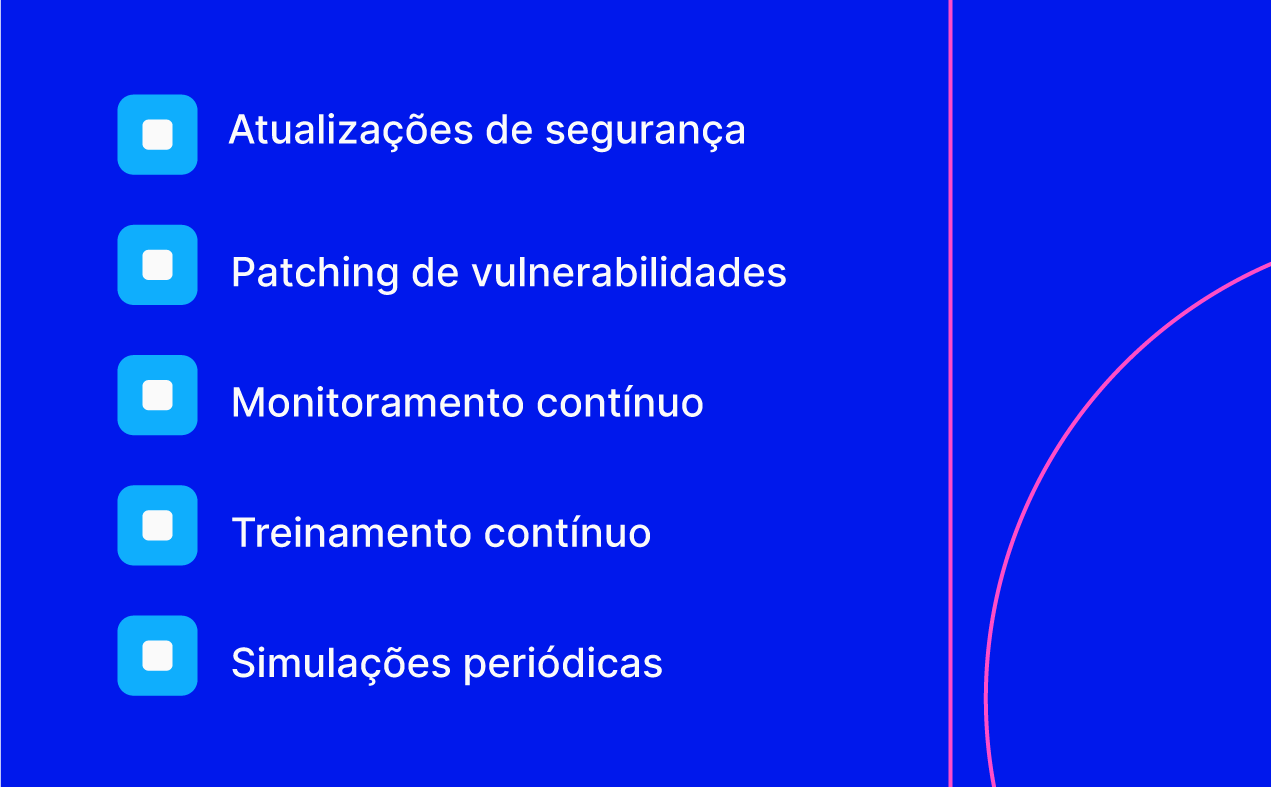
After conducting a penetration test, it is crucial to implement a series of post-test practices to strengthen security. These practices range from applying corrective measures to continuous monitoring. See below:
Security updates
Implementing security updates is one of the essential recommendations after a penetration test. They should be applied not only to the systems where vulnerabilities were found, but to all IT components to maintain a high security standard.
Patching vulnerabilities
Patching vulnerabilities involves applying specific fixes to detected flaws. These corrective measures are essential to mitigate risks and should be prioritized according to the criticality of the vulnerabilities found.
Continuous monitoring
Continuous monitoring ensures the rapid detection of suspicious or unauthorized activities, enabling swift responses to potential incidents. Monitoring tools should be configured to provide real-time about potential threats.
Continuous training
Human capital is often the weakest link in information security. Ongoing training for technical staff and end users is vital to keep them informed about security practices and aware of the procedures to be followed.
Periodic simulations
Conducting periodic attack simulations, similar to the penetration test that generated the recommendations, is an effective strategy for verifying the effectiveness of the corrective measures applied and keeping the team prepared to respond to incidents.
Cybersecurity: The Future of Penetration Testing
As cyber threats evolve, penetration testing becomes an essential tool for identifying vulnerabilities and strengthening information security. This segment explores emerging trends and the role of artificial intelligence and IoT (Internet of Things) in these processes.
Learn more:
Emerging trends
The cyber threat landscape is constantly changing, requiring penetration testing to continually adapt to advanced threats. Automated tools are being implemented to detect and react to vulnerabilities more quickly. Automation, combined with machine learning, allows for continuous updates and learning about new hacking .
Artificial intelligence and security
Artificial intelligence has the potential to transform penetration testing, offering predictive analytics on data breaches and cyberattacks. It optimizes the identification of complex patterns of cyber threats, allowing companies to anticipate and mitigate risks more effectively. Tools that utilize AI make information security not just reactive, but proactive.
IoT and security
IoT devices expand the attack surface in cybersecurity. Penetration testing needs to consider the heterogeneity and quantity of devices in a security strategy. The complexity of IoT-specific vulnerabilities increases the importance of conducting targeted tests that can effectively address security flaws in this expanding context. Compliance with standards and regulations also becomes crucial to ensure protection against cyberattacks on these devices.
How are penetration testing and secure development (DevSecOps) related?
Penetration testing is an essential component in the world of DevSecOps software development lifecycle .
Thus, the main relationship between them lies in the integration of testing within the development stages , promoting a proactive approach to security.
software development follows a model where security is an ongoing consideration:
- Planning and design : safety is considered from the very beginning;
- Development: the code is written with security practices in mind;
- Testing: Security tests, including penetration tests, are performed;
- Deployment: safety measures are applied before launch.
With this approach, penetration testing is not a one-time event, but rather an interactive and continuous practice that seeks to identify and mitigate vulnerabilities in real time. The DevSecOps philosophy encourages all team members to collaborate on security, dissolving traditional barriers between developers, security specialists, and operations.
Count on Skyone to perform your penetration test
After all this information, the question remains: is your business's digital environment truly secure? Stay one step ahead of attackers by fixing vulnerabilities and mitigating risks!
Skyone 's penetration testing is based on a deep understanding of attack techniques, known and unknown vulnerabilities, and how cybercriminals can exploit them.
Thus, our experts proactively check for vulnerabilities that could allow access to your confidential information, the possibility of denial of service, data hijacking for ransom purposes, and much more.
Learn more about our platform!
Conclusion
Performing a penetration test is a crucial step in strengthening cybersecurity. It allows for the identification and remediation of vulnerabilities, acting as a catalyst for the continuous improvement of a business's defense strategies.
Today, attacks are becoming increasingly sophisticated, generating millions in losses for companies around the world. One of them is ransomware – an attack about which many organizational leaders still have doubts regarding its impact and how to combat it.
Take a look at our special article on this topic!