Skip to content


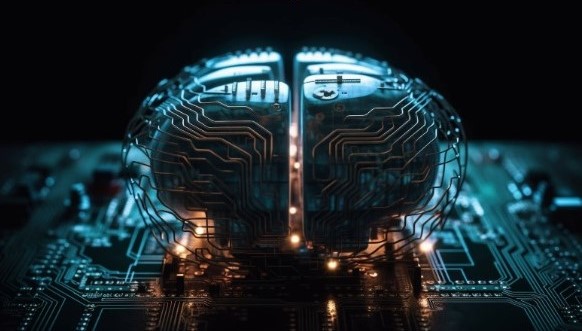
Just as blood circulates through the human body, carrying essential nutrients to each cell, we can say that data integration works in the same way , like a large digital circulatory system , ensuring that information flows uninterrupted throughout the company. This fluid communication is essential for companies to operate efficiently and leverage artificial intelligence (AI) solutions with precision.
In a world where the volume of data grows every second, the ability to integrate this information effectively becomes a huge competitive advantage . When data is integrated, analyses become faster and more reliable , allowing companies to identify patterns and trends more accurately and quickly.
A McKinsey study confirms this growth relationship, showing that companies that use advanced data analytics are 23 times more likely to acquire customers, 6 times more likely to retain customers, and 19 times more likely to be profitable than those that do not.
How can your company benefit from this transformation? What tools and strategies can be implemented to optimize data integration? In this article, we will explore how data integration is shaping the future of business , highlighting its applications, benefits, and challenges.
Enjoy your reading!
The role of data in artificial intelligence
Data is the fuel that powers AI . Without accurate and relevant information, AI algorithms cannot function effectively. In this section, we will explore how data directly impacts the quality and performance of artificial intelligence solutions, and why investing in quality data is essential for any successful AI strategy.
The importance of quality data for AI
Data quality is crucial to ensuring that artificial intelligence algorithms make accurate and reliable predictions. This is because, when well-structured, data helps minimize errors and improve the effectiveness of AI models. Companies that invest in clean data reap substantial benefits in terms of performance and innovation.
AI based on large volumes of data ( big data )
Big data is a valuable resource for AI, allowing algorithms to learn and evolve from large datasets. This massive amount enables the identification of complex patterns and the generation of insights that would be impossible to detect manually. The ability to process and analyze large volumes of data in real time is a competitive advantage for modern companies.
What is data integration?
In today's digital world, companies deal with a massive amount of data from various sources , such as internal systems, external platforms, cloud databases, and others. Data integration emerges in this scenario as a solution to consolidate this information and ensure that it flows seamlessly between systems , offering a unified and coherent view of the data.
Next, we will explore the main data integration techniques and understand in which scenarios each one is most suitable, as well as identify their differences and similarities .
Definition and main techniques
Another simple way to understand data integration is through the analogy of a railway network : different tracks (systems and sources) connect so that the trains (data) arrive at the same final destination (centralized system), ready to be used.
Integration is comprised of different approaches or techniques , each addressing specific communication and processing needs. Check out the 3 most common and widely used techniques .
1) ETL ( Extract, Transform, Load): is a technique that extracts data from various sources, transforms it into a standardized format, and loads it into a centralized system, such as a data warehouse .
- When to use it: ETL is essential for consolidating historical data and preparing information for future analysis and reporting. It is suitable for batch that do not require real-time updates, as well as for consolidating data for Business Intelligence big data analytics .
- Key benefits (pros): standardizes and prepares data for complex analyses; facilitates the generation of consolidated reports.
- Main challenges (cons): long processing time for large volumes of data; not suitable for real-time operations.
2) EAI ( Enterprise Application Integration ): This technique connects different business systems and applications, allowing for the continuous exchange of information in real time. It eliminates data silos and improves interoperability between systems (concepts that we will discuss in more detail below), ensuring that different platforms share data efficiently.
- When to use it: EAI is ideal for situations that require instant data synchronization between systems, such as real-time updates of orders and inventory between an e-commerce and an ERP system. It is also suitable for integrating transactional operations and ensuring data consistency in distributed systems, preventing duplication and delays.
- Key benefits (pros): ensures real-time synchronized data, optimizing operations; improves communication and eliminates silos between systems and departments.
- Main challenges (cons): complex to implement in legacy systems; requires continuous maintenance to maintain efficiency and stability.
3) ESB ( Enterprise Service Bus ): This approach connects various systems and applications in a structured and scalable way. It allows managing multiple simultaneous integrations in a central infrastructure, facilitating the monitoring, control, and orchestration of communications between heterogeneous systems.
Main challenges (cons): high cost and complexity in implementation; requires constant monitoring to ensure performance and avoid failures.
When to use it: ESB is recommended for companies with complex infrastructures that need to integrate various systems simultaneously, such as banks, insurance companies, or large corporations. It is essential for environments that require high scalability and flexibility, allowing the addition of new systems without disrupting existing processes.
Key benefits (pros): offers high scalability and flexibility for large infrastructures; centralizes and orchestrates communication, facilitating the monitoring and maintenance of integrations.
Centralization and interoperability
Data centralization involves bringing information together in a single system , allowing for easier and more efficient access. This process, called interoperability , is essential to ensure that different systems and applications can share and use data effectively, promoting fluid communication between diverse platforms .
In turn, interoperability is achieved by ensuring that these systems can exchange information without barriers that hinder integrated analysis.
How does data integration improve AI?
Data integration is not just a trend: it's a necessity for any company that wants to maximize the potential of its artificial intelligence. By consolidating information from multiple sources, data integration improves the accuracy of AI algorithms and accelerates operational processes.
Increased accuracy in AI algorithms
Integrated data allows artificial intelligence to operate with more complete and consistent information. Consolidating data from diverse sources reduces the likelihood of errors and inconsistencies , providing a solid database for training algorithms. Data standardization also plays an important role in this process, ensuring that data formats are harmonized, which facilitates accurate analyses .
Furthermore, data integration also allows for a unified view, essential for developing more accurate AI models. Data accuracy is especially important in sectors such as healthcare and finance, where the degree of accuracy can directly impact results .
Reducing data silos and information fragmentation
Data silos are isolated compartments of information that remain restricted to a specific area or system, hindering communication and data sharing between different departments or platforms within an organization. This isolation occurs when systems are not integrated and each stores information independently, which can result in data duplication, inconsistencies, and rework.
Eliminating data silos is vital to avoid information fragmentation and ensure operational efficiency . Application integration facilitates the consolidation of data on a single platform, promoting a unified view. This allows different departments or systems to access and use data in a coordinated manner, reducing duplication and inconsistencies.
With minimized information fragmentation, organizations can make more informed and faster decisions . A single view of the data also simplifies analysis, enhancing the insights that can be extracted. Furthermore, reducing silos also fosters collaboration between teams , ensuring that everyone has access to shared and up-to-date data in real time.
Automation and acceleration of processes
Automation through data integration means that manual and time-consuming processes can be replaced by faster, automated workflows. This not only speeds up processing but also frees up human resources for more strategic activities . Thus, automated processes ensure greater scalability and optimization of operations, facilitating the expansion of AI's analytical and decision-making capabilities.
Integrations between different applications promote a continuous flow of data, generating insights . Operational efficiency is thus increased, as information is processed more quickly and accurately . The reduction in manual intervention also decreases the incidence of errors, ensuring a more reliable and consistent data environment for artificial intelligence.
What are the main benefits of data integration in AI?
Data integration offers a range of advantages that go beyond simply organizing information; it can provide everything from insights to personalized experiences. Let's explore how this practice can transform artificial intelligence operations .
Faster insights and strategic decisions
Data integration enables companies to access accurate and up-to-date information from multiple sources . This results in insights and better-informed strategic decisions, increasing organizational efficiency. Furthermore, data quality is improved by unifying different sources, which is important for business intelligence.
In turn, collaboration between different departments is also facilitated , since everyone has access to the same information. This not only optimizes decision-making but also contributes to cost savings through the efficient use of available resources.
Continuous improvement of AI models
Another advantage of the continuous integration of diverse data: by constantly feeding artificial intelligence models with new information, it improves the accuracy and effectiveness of these systems . With up-to-date, high-quality data, AI models can quickly adapt to changing patterns and new situations, ensuring consistent performance.
Therefore, continuous improvement of the models leads to a better ROI , since the systems are able to offer more accurate and relevant answers. This is invaluable in sectors such as healthcare, finance, and retail!
Customization and efficiency in various areas of the business
In the retail industry, for example, companies can analyze consumption patterns to provide personalized recommendations to customers. This not only improves the customer experience but also increases sales.
In internal operations, efficiency is enhanced as integrated data allows for a better understanding of customer needs and business operations. This enables companies to allocate resources more intelligently , optimizing processes and reducing waste, resulting in significant financial savings.
Data integration technologies and tools for AI
As expected, with the increasing complexity of data, new technologies and tools are also emerging to facilitate its integration.
Check out some of the most effective solutions available on the market that help companies integrate data efficiently and securely:
- Microsoft SQL Server Integration Services (SSIS) : a tool for data integration that allows the extraction, transformation, and loading of data from various sources.
- Informatica PowerCenter : a widely used data integration platform for transforming large volumes of raw data into useful information.
- Amazon RedShift , as a data warehouse , is a cloud-based data repository designed for complex analytical queries and structured data consolidation.
- Data lakes : allow data to be stored in various formats, supporting large volumes and offering flexibility for diverse analyses.
- APIs and integration software: facilitate the collection and integration of data in real time, which is crucial for systems that require instant updates.
- Data virtualization: allows direct access to data without physically moving it, speeding up analysis and decision-making.
- Data replication and federation: technologies that enable the sharing and synchronization of data between different systems, ensuring its consistency and up-to-dateness.
- Open-source tools : allow for the flexible and cost-effective publication and subscription of real-time data streams.
- Integration with IoT (Internet of Things): ensures that data collected from connected devices flows continuously for analysis and use in AI.
- Data pipelines machine learning .
These technologies and tools are essential to ensuring that companies can integrate and use data efficiently and effectively, maximizing the potential of artificial intelligence .
What are the challenges in integrating data for AI?
Despite its many benefits, data integration is not without its challenges . Issues such as security, privacy, and system compatibility are just some of the barriers that companies may face.
Let's list below the main sensitive issues that need to be addressed
1) Compliance with privacy regulations: It is important to protect the personal information of the population. Laws such as the LGPD in Brazil require companies to take good care of data to avoid problems and penalties and maintain customer trust.
2) Data migration from legacy systems: When a company replaces old systems with new ones, it needs to organize and adapt its data to the new programs so that they function properly . Tools like Master Data Management help keep everything in order and error-free.
3) Data management: keeping data accurate and secure is essential. This means ensuring that information is always up-to-date and protected against unauthorized access, especially in areas such as healthcare and finance.
4) Diversity of data formats: data comes in many different formats. It needs to be transformed so that it can be used in new systems without losing important information .
5) Extracting insights : To use data effectively, we need processes that help overcome these challenges . Solutions should grow with the company and adapt to changes. Clear tools and strategies help to make the most of artificial intelligence.
Skyone stands out as a strategic partner for companies seeking to overcome these challenges and achieve digital transformation. With expertise in simplifying complex technologies and offering customized solutions data securely and efficiently, increasing the autonomy and productivity of companies.
By offering 24/7 and up-to-date support , we facilitate trend prediction and rapid responses to market demands, ensuring that companies are prepared for the AI-driven future .
Conclusion
As we have seen, data integration is not just a technical issue, but a strategic shift that transforms how companies operate and make smarter decisions . With a well-integrated database , companies can:
- Enhance your AI algorithms, ensuring that predictions and analyses are more accurate and driven by complete and consistent data.
- Eliminate silos and fragmentation of information, facilitating collaboration between teams and accelerating strategic decision-making.
- Automating operational processes optimizes resources and frees up time to focus on strategic activities, providing the agility to respond to market demands.
Of course, this journey also brings challenges , such as ensuring compliance with privacy regulations, overcoming the migration of legacy systems, and maintaining data consistency over time. But with the right technologies and proper management , it's possible to overcome these barriers and unlock the true potential of integrated data.
Data integration is undoubtedly the cornerstone of digital transformation. Companies that invest in this path are able to transform raw data into strategic decisions and create new growth opportunities in an increasingly dynamic market.